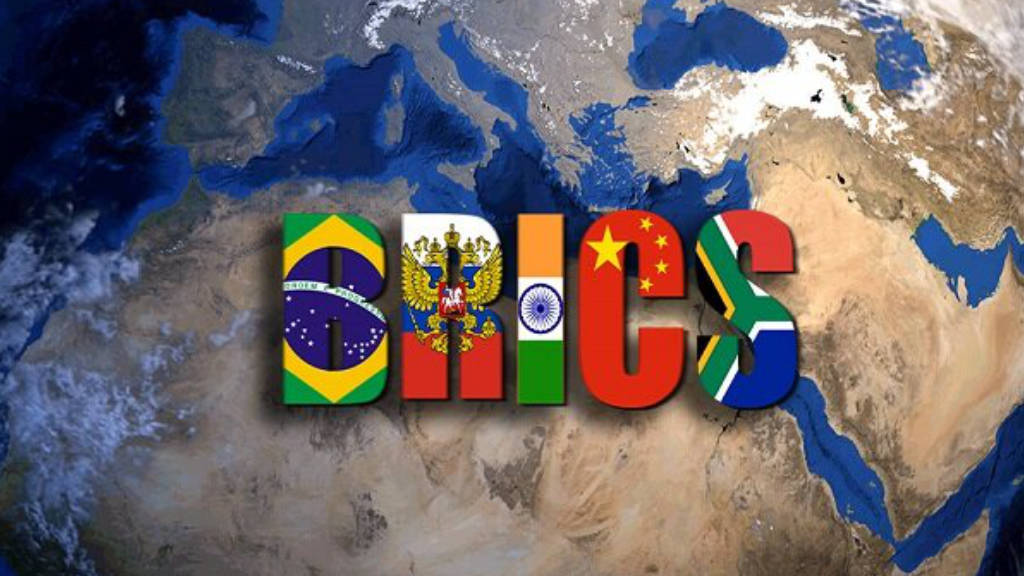
BRICS Rising: The Global Influence of an Emerging Power Block
In an era of shifting global dynamics, the BRICS alliance—Brazil, Russia, India, China, and South Africa—has emerged as a formidable force challenging the Western-dominated world order. Representing over 40% of the global population and nearly a third of global GDP, BRICS seeks to amplify the voice of emerging economies, promote a multipolar world, and reshape institutions like trade, finance, and governance. From the New Development Bank to de-dollarization efforts, BRICS is carving out a space for itself as a counterweight to U.S. and European influence. This article explores the bloc’s economic, political, and strategic influence, its challenges, and its implications for global relations, with a spotlight on Brazil’s role under President Luiz Inácio Lula da Silva.
Economic Power: Redefining Global Finance
BRICS’ economic influence is rooted in the collective strength of its members, particularly China, the world’s second-largest economy, and India, a rapidly growing tech and manufacturing hub. Together, the bloc accounts for $26 trillion in GDP (PPP terms) as of 2023, surpassing the G7 in purchasing power parity. Key initiatives highlight its ambition to challenge Western financial dominance:
- New Development Bank (NDB): Launched in 2014, the NDB funds infrastructure and sustainable development projects, offering an alternative to the World Bank and IMF. By 2025, it has disbursed over $35 billion for projects like Brazil’s renewable energy grids and South Africa’s water systems. Unlike Western institutions, the NDB avoids political conditions, appealing to developing nations wary of U.S. influence. Brazil, under Lula, has leveraged the NDB to fund climate initiatives, with former President Dilma Rousseff leading the bank since 2023.
- De-dollarization Push: BRICS is actively exploring alternatives to the U.S. dollar in global trade. China and Russia conduct over 90% of their trade in yuan or rubles, while Brazil has experimented with yuan-based transactions for agricultural exports to China. Lula has vocally supported reducing dollar dependence, advocating for a BRICS common currency framework at the 2024 Kazan Summit. However, the dollar still dominates 88% of global transactions, and India’s cautious stance on de-dollarization highlights internal hesitancy.
- Intra-BRICS Trade: Trade among members reached $1.2 trillion in 2023, bolstered by China’s Belt and Road Initiative and Brazil’s agricultural exports. The BRICS Business Council promotes investment in sectors like technology and energy, with India’s pharmaceutical industry and Russia’s energy resources driving growth.
Despite these strides, economic disparities—China’s GDP is ten times that of South Africa—create uneven influence within the bloc. Currency volatility and logistical barriers also hinder initiatives like BRICS Pay, a proposed SWIFT alternative. Sentiments on X reflect optimism about BRICS’ economic potential, with users praising its “challenge to Western monopolies,” but skeptics argue it remains “too fragmented” to rival the G7.
Political Influence: A Voice for the Global South
BRICS’ political clout lies in its advocacy for a multipolar world and its appeal to the Global South. The bloc’s summits serve as platforms to coordinate positions on issues like climate change, trade equity, and global governance reform. Lula has been a vocal proponent of BRICS’ political agenda, emphasizing Brazil’s role as a bridge between developing and developed nations.
- Global Governance Reform: BRICS demands greater representation in institutions like the UN Security Council, where India and Brazil seek permanent seats, and the IMF, where Western nations hold disproportionate voting power. Lula’s 2025 call for a “new global architecture” at the UN General Assembly echoed this sentiment, resonating with African and Asian nations.
- Non-Alignment Stance: BRICS positions itself as a neutral bloc, rejecting Western sanctions and interventionism. Russia’s leadership has leveraged BRICS to counter isolation over Ukraine, while Brazil and South Africa maintain neutrality in global conflicts. Lula’s refusal to condemn Russia’s actions outright and his peace proposal for Ukraine, though criticized by the West, underscore BRICS’ emphasis on dialogue over confrontation.
- Expansion and Outreach: The 2023 addition of Egypt, Ethiopia, Iran, Saudi Arabia, and the UAE, effective 2024, expanded BRICS’ geopolitical reach, particularly in energy markets, where it now controls 40% of global oil production. Over 30 countries, including Turkey and Indonesia, have applied to join, signaling BRICS’ growing appeal. However, managing diverse interests risks diluting unity, as India’s Quad membership and Brazil’s Western ties create tensions.
X posts reveal polarized views, with some hailing BRICS as “the future of global fairness” and others dismissing it as a “China-dominated club.” Lula’s engagement with Russia and China, including his 2025 Moscow visit, has drawn scrutiny from Brazilian critics who fear it alienates the U.S., a key partner.
Strategic Influence: Shaping a Multipolar World
While not a military alliance, BRICS wields strategic influence through economic leverage, energy dominance, and diplomatic coordination:
- Energy and Resources: With new members like Saudi Arabia and Iran, BRICS controls a significant share of global oil and gas markets. Russia’s energy exports, redirected to China and India amid Western sanctions, strengthen the bloc’s resilience. Brazil’s offshore oil reserves and ethanol production further enhance its strategic role.
- Technology and Innovation: China’s advances in AI and 5G, combined with India’s IT sector, position BRICS as a tech contender. The BRICS Digital Economy Framework fosters collaboration in cybersecurity and digital payments, challenging U.S. tech giants. Lula has pushed for technology transfers from China to boost Brazil’s industrial capacity.
- Diplomatic Leadership: BRICS’ emphasis on South-South cooperation enhances its soft power. Initiatives like the BRICS Games and academic forums promote cultural ties, while joint climate pledges appeal to developing nations. Lula’s 2025 proposal for a BRICS-led mediation platform for global conflicts reflects the bloc’s diplomatic ambitions.
However, strategic coherence is hampered by internal rivalries, notably India-China border disputes and Russia’s economic constraints. The lack of a security framework limits BRICS’ ability to address regional conflicts. X users debate its strategic weight, with some calling it a “geopolitical pivot” and others arguing it’s “all talk, no teeth.”
Brazil’s Role and Lula’s Vision
Under Lula, Brazil has embraced BRICS as a platform to assert its global influence and diversify partnerships. His outreach to China, Brazil’s largest trading partner, has secured investments in infrastructure and green energy, while his engagement with Russia, including discussions on nuclear technology in 2025, reflects a pragmatic approach to energy security. Lula’s leadership in BRICS aligns with his broader foreign policy of non-alignment and South-South cooperation, though it risks straining ties with the U.S., as noted in earlier discussions of his alignment with nations like China and Russia.
Domestically, Lula’s BRICS focus faces criticism. Polls indicate Brazilians prioritize economic recovery over foreign policy, and some lawmakers, like Congressman Luiz Philippe, warn that Lula’s ties to U.S. adversaries could invite diplomatic fallout. Yet Lula defends his strategy as essential for Brazil’s sovereignty, arguing that BRICS offers an alternative to Western dominance.
Challenges and Future Prospects
BRICS’ influence is tempered by internal and external challenges:
- Internal Divisions: Differing political systems and priorities—India’s democracy versus China’s authoritarianism—complicate unity. Brazil and India often resist China’s dominance, as seen in debates over NDB funding allocations.
- China’s Shadow: China’s economic and political weight risks overshadowing smaller members, prompting concerns from Brazil and South Africa about unequal influence.
- Western Resistance: The U.S. views BRICS’ de-dollarization and expansion as threats, potentially leading to sanctions or pressure on swing states like Brazil. Lula’s balancing act between BRICS and Western partners will be tested as U.S. President Donald Trump, re-elected in 2025, adopts a more confrontational stance.
- Implementation Gaps: Ambitious goals like a BRICS currency or SWIFT alternative remain distant, with logistical and political barriers slowing progress.
Looking ahead, BRICS’ influence will depend on its ability to integrate new members, bridge internal divides, and deliver on economic promises. The 2025 BRICS Summit in Brazil, hosted by Lula, will be a critical test of the bloc’s cohesion and ambition.
Conclusion
BRICS stands at a crossroads, wielding significant economic, political, and strategic influence as a champion of the Global South and a challenger to Western hegemony. Its initiatives, from the NDB to de-dollarization, signal a bold vision for a multipolar world, with Brazil under Lula playing a pivotal role. Yet, internal rivalries, China’s dominance, and Western pushback pose formidable hurdles. As one X user aptly noted, “BRICS is a giant with potential, but it needs to walk in step.” Whether it can translate its vision into lasting impact will shape the future of global power dynamics.

Leave a Reply